




















Recipe Costing and Food Cost Control: A Practical Restaurant Guide
How to cost every recipe, calculate food cost percentage, price your menu from real numbers and close the gap between theoretical and actual food cost.
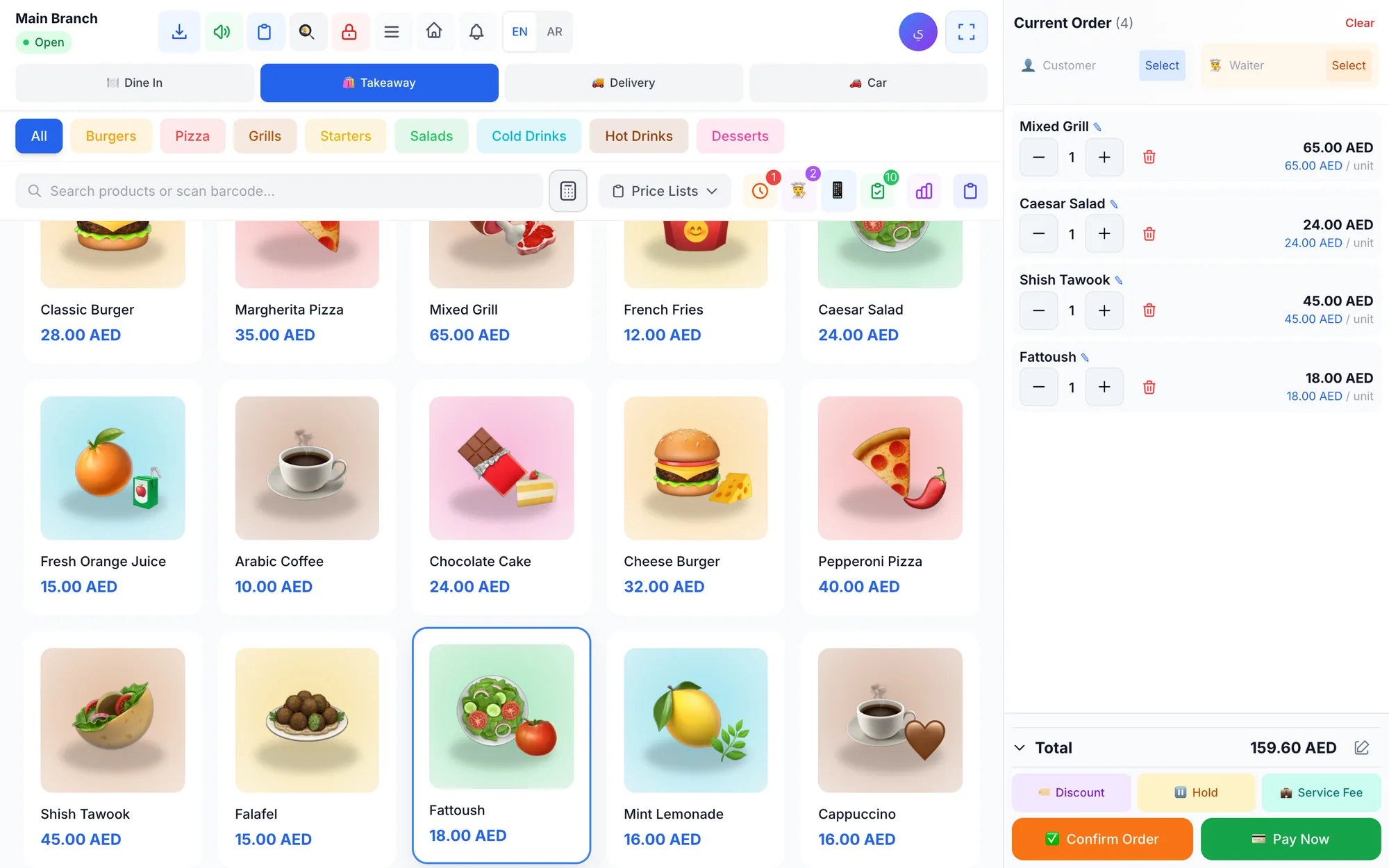
Recipe costing is calculating what every ingredient in a dish costs, so you know its food cost percentage and profit before you set the price. To control food cost, write a standard recipe for each menu item, link it to ingredients in your POS so every sale deducts stock, and compare expected usage with actual usage every week.
Margins in most restaurants shrink quietly. Supplier prices move, portions drift and waste goes unrecorded, and nobody notices until the month-end numbers arrive. A burger that made good money in January can be barely breaking even by June.
This guide walks you through the whole process: the formulas, a worked recipe card, how to price a menu from cost, why actual food cost usually runs higher than theory, and how to let your POS do the counting for you.
- Food cost percentage = ingredient cost per portion ÷ selling price × 100.
- Cost every recipe by usable yield, not by purchase weight.
- Price from a target food cost, then check the cash margin each dish leaves.
- The gap between theoretical and actual food cost exposes waste, over-portioning and missing stock.
- Linking dishes to ingredients in the POS deducts stock automatically on every sale.
What is food cost and why does it matter?
Food cost is the money you spend on the ingredients that go into the dishes you sell. It is usually expressed as a percentage of food sales, which makes it easy to compare across weeks, branches and menu items, whatever your prices are.
Together with labour, it is one of the two biggest costs a restaurant controls day to day. Rent is fixed by a lease, but food cost changes with every delivery, every portion and every plate that comes back to the kitchen. That is why a few percentage points matter: in a busy restaurant, the difference between a 30% and a 34% food cost can decide whether the year feels comfortable or stressful.
How do you calculate food cost percentage?
There are two numbers worth knowing, and you need both of them.
Plate cost (theoretical food cost)
This is what a dish should cost if the recipe is followed exactly. Add up the cost of every ingredient in one portion, then divide by the selling price:
Food cost % = ingredient cost per portion ÷ selling price × 100
If a plate of chicken biryani uses AED 9 of ingredients and sells for AED 36, its food cost is 9 ÷ 36 × 100 = 25%.
Actual food cost for a period
This is what you really spent, measured from your stock. Calculate it weekly or monthly:
Actual food cost % = (opening stock + purchases − closing stock) ÷ food sales × 100
Example: a restaurant in Dubai starts the week with AED 8,000 of stock, buys AED 12,000 and closes with AED 7,500. It used AED 12,500 of ingredients. With AED 40,000 of food sales, actual food cost is 31.25%.
If your recipes say the menu should run at 28% and your stock says 31%, that three-point gap is food leaving the kitchen without being sold. Finding it is the whole point of food cost control.
How to cost a recipe step by step
- List every ingredient in one portion, including oil, sauces, garnish and the side that comes with it.
- Weigh, don't guess. Write quantities in grams, millilitres or pieces exactly as the kitchen plates them.
- Use the latest purchase price from the supplier invoice, converted to the same unit (per gram, per millilitre, per piece).
- Adjust for yield. Trimming, bones, peeling and cooking loss mean you use less than you buy.
- Add it up to get the plate cost, then divide by the price to get the food cost percentage.
- Review it whenever a supplier price or the recipe itself changes.
Why yield changes everything
Say you buy 10 kg of whole chicken at AED 15 per kg, so AED 150. After deboning and trimming, you have 6.5 kg of usable meat. Your real cost is 150 ÷ 6.5 = AED 23.08 per usable kg, not AED 15. Cost a chicken dish at the purchase price and every plate looks about a third cheaper than it really is.
A worked recipe card
Here is a classic beef burger with fries, priced at AED 38:
| Ingredient | Portion | Purchase price | Cost per portion |
|---|---|---|---|
| Beef patty | 150 g | AED 42 / kg | AED 6.30 |
| Brioche bun | 1 piece | AED 1.20 / piece | AED 1.20 |
| Cheddar | 20 g | AED 40 / kg | AED 0.80 |
| Lettuce, tomato, onion | 50 g | AED 8 / kg | AED 0.40 |
| Burger sauce | 25 g | AED 16 / kg | AED 0.40 |
| Fries | 150 g | AED 10 / kg | AED 1.50 |
| Plate cost | AED 10.60 |
Food cost is 10.60 ÷ 38 = 27.9%, and each burger leaves AED 27.40 to cover labour, rent and profit. If beef rises to AED 48 per kg, the plate cost becomes AED 11.50 and food cost climbs to 30.3% without anyone touching the menu.
What is a good food cost percentage for a restaurant?
There is no single correct number. As a rule of thumb, many restaurants aim for a food cost somewhere between a quarter and a third of the menu price, but the right target depends on your concept, your labour costs and your prices.
- Drinks and coffee usually run a much lower food cost than plates, which helps balance the menu.
- Premium proteins such as steak and seafood often carry a higher percentage but a larger cash margin.
- Fast casual and takeaway menus can tolerate a slightly higher food cost when labour per order is low.
- Delivery-heavy menus need room for packaging, so put boxes, cups and sauces into the recipe.
Set a target for the whole menu, then accept that individual dishes will sit above or below it. What matters is the blended result and the cash each dish leaves behind.
How to price your menu using recipe cost
Method 1: Target food cost
Divide the plate cost by your target percentage. For the burger above at a 28% target: 10.60 ÷ 0.28 = AED 37.86, which rounds to AED 38. This gives a quick, consistent starting price for every new dish.
Method 2: Cash margin per dish
Percentages can mislead. A steak with a 38% food cost that sells for AED 120 leaves AED 74.40, while a salad at 20% that sells for AED 30 leaves AED 24. Look at the money each dish contributes, not only its percentage, before you cut a "high-cost" item.
Method 3: Menu engineering
Combine popularity (how many you sell) with margin (cash left per dish) and sort every item into four groups:
| Group | Popularity | Margin | What to do |
|---|---|---|---|
| Stars | High | High | Feature them and protect the recipe |
| Workhorses | High | Low | Re-cost, trim the portion or raise the price slightly |
| Puzzles | Low | High | Rename, reposition, ask staff to recommend |
| Dogs | Low | Low | Remove or replace |
Your POS product report gives you the popularity side; your recipe costs give you the margin side. Review the grid every quarter, or sooner when supplier prices jump.
Why is actual food cost higher than theoretical?
The gap between what your recipes say you should use and what you actually used is called variance. A small gap is normal. A growing one always has a cause, and it is usually one of these:
- Over-portioning: a heavier hand on rice, cheese or sauce during the rush.
- Waste: spoilage, burnt dishes, over-prep and returned plates that are never recorded.
- Unrecorded meals: staff food and complimentary dishes that never pass through the POS.
- Voids and refunds without a reason: the food was cooked but the sale disappeared.
- Receiving errors: paying for 20 kg when 18 kg arrived, or accepting a lower grade.
- Outdated recipes: the chef changed the dish but the recipe card stayed the same.
- Theft: stock leaving through the back door.
Every item on that list is easier to catch when stock moves with each sale and every adjustment needs a reason. For the people side of the problem, see our guide on reducing theft and mistakes at the POS.
How Quip POS handles recipe costing and restaurant inventory
In Quip POS, each menu item can be linked to its ingredients. From then on, every sale deducts those ingredients from stock automatically, and every dish shows its cost and margin, so you can see which dishes earn the most and which need a new price or a smaller portion.
- Automatic stock deduction: sell a burger and the patty, bun, cheese and fries come off stock without anyone counting.
- Suppliers and purchase invoices: record what you buy, supplier payments and what you still owe each supplier.
- A warehouse per branch: each location keeps its own stock, with low-stock alerts before a key ingredient runs out.
- Stock adjustments with reasons: waste, spoilage and staff meals are recorded with a reason instead of disappearing.
- Voids and refunds need a reason, follow each employee's permissions and are recorded in the audit log.
- Reports for products, sales, discounts and profit and loss, plus a live dashboard with today's best sellers.
If you run several branches, each one keeps its own stock and prices while you see combined reports. The full restaurant toolkit, from tables and the kitchen display to the waiter app, is on the restaurant POS page, and our complete guide to restaurant POS systems explains how the pieces fit together.
A weekly food cost control routine
- Monday: check last week's product report. Which dishes sold most, and which barely moved?
- When deliveries arrive: weigh and count against the invoice before you sign, then record the purchase invoice.
- Daily: record waste and staff meals as stock adjustments with a reason. Make it part of the closing shift.
- Weekly: count your 15 to 20 most valuable ingredients (proteins, cheese, oil, coffee) and compare them with system stock.
- Weekly: calculate actual food cost and compare it with the theoretical number from your recipes.
- Monthly: re-cost recipes whose ingredients changed price and update the menu engineering grid.
- Quarterly: retire the dogs, promote the puzzles and adjust prices on the workhorses.
You do not need to count everything every day. Counting the expensive items often is what moves the number. The reports behind this routine are explained in the POS reports every owner should check.
Start costing your menu this week
Pick your ten best-selling dishes, cost them with the method above and link them to their ingredients; that exercise often reveals at least one dish that needs a new price or a smaller portion. To see recipes, automatic stock deduction and dish margins in a working system, open the live restaurant demo or start a 14-day free trial with no card and set up your own menu.
Frequently asked questions
How do I calculate food cost percentage?
What is a good food cost percentage for a restaurant?
Should packaging be included in food cost?
How often should I update my recipe costs?
How does a POS deduct ingredients from stock?
How do I price a new dish on my menu?
Talk to the Quip POS team
Tell us about your business and we will show you the right setup, help you add your products and connect your printers.
Related articles
Restaurants & cafés
Opening a Restaurant: Technology and Operations Checklist
Before you open a restaurant, make sure your menu, printers, kitchen screens, staff roles and payment methods are ready. This checklist helps you test service before day one.
 Restaurants & cafés
POS for Bakeries and Sweet Shops: A Practical Guide
A bakery POS should speed up the counter, manage variants, track recipe cost, hold pre-orders until pickup and record wastage. Here’s what to look for.
Restaurants & cafés
Table Management for Restaurants: Map, Move, Merge and Split Bills
Learn how to organise restaurant tables with zones, move and merge parties smoothly, and split the bill without slowing service. Practical tips for faster turnover and fewer mistakes.