




















Cash and Shift Management: Close the Day Without Shortages
How to open and close POS shifts, count cash, read the over/short report and keep mixed payments and unpaid orders under control, with an end of day checklist.
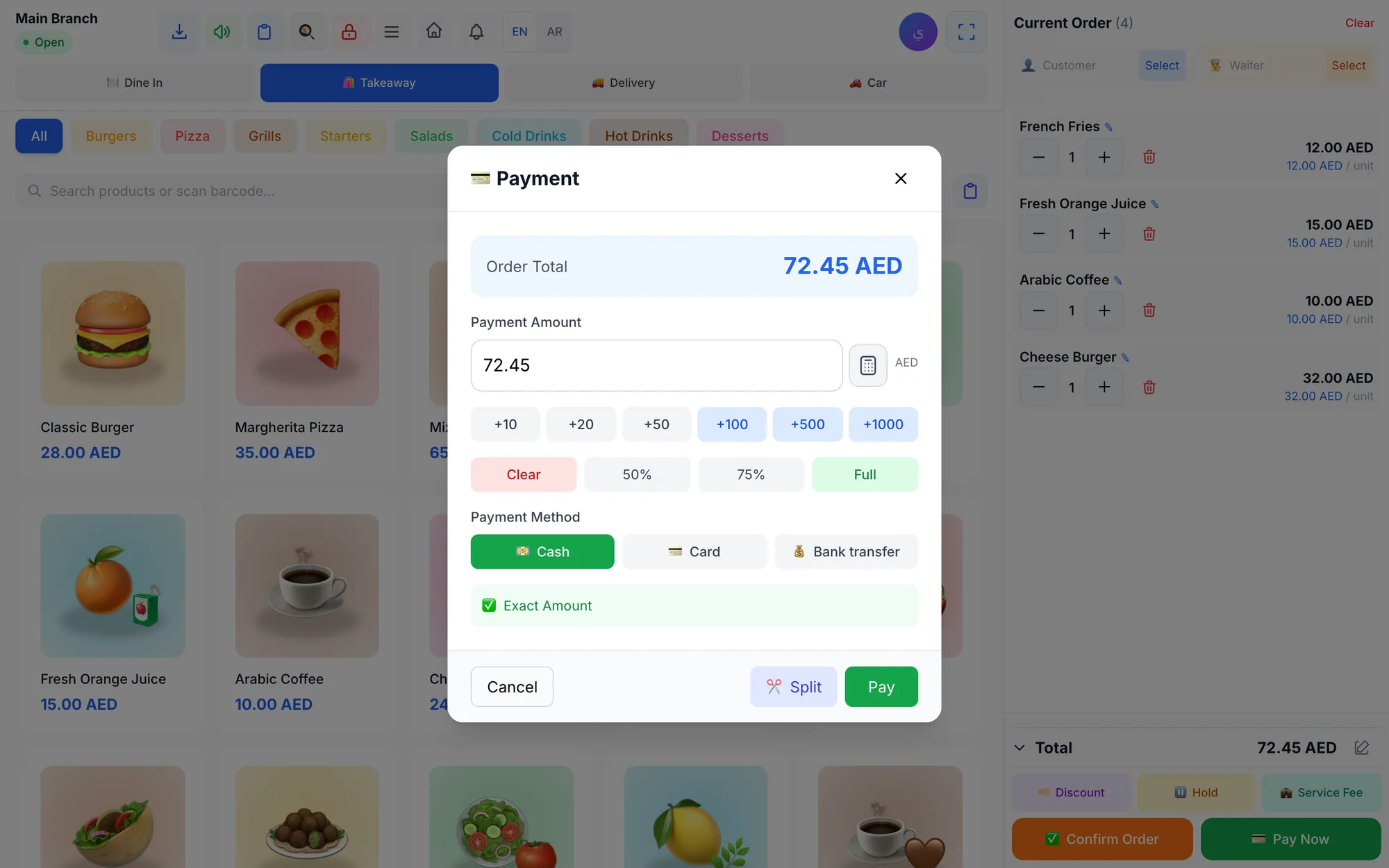
Cash management at the POS means every shift starts with a counted opening float, every sale is recorded with the right payment method, and every shift ends with a cash count compared against what the system expects. The difference, shown in the over/short shift report, tells you whether the day closed cleanly or needs a closer look.
Shortages rarely come from one big event. They build from small leaks: wrong change during the lunch rush, a card payment recorded as cash, a takeaway left unpaid, a refund handed over without a record. By the end of the month, a few dirhams a day has become a real number.
This guide shows how to open and close shifts properly, how to handle mixed payments and unpaid orders, how to read the over/short result, and an end of day checklist your team can follow from tomorrow.
- One person, one drawer, one count: responsibility must always be clear.
- Count the opening float before the first sale, not after.
- Record every payment with its real method, especially on split bills.
- Follow up unpaid orders before you close, not next week.
- Investigate patterns, not every single small difference.
What is shift management in a POS system?
A shift is the period during which one cashier is responsible for the till, from opening to closing. The POS records everything that happens in it: cash sales, card payments, bank transfers, refunds and unpaid orders. At closing, it works out how much cash should be in the drawer.
The core formula is simple:
Expected cash = opening float + cash sales + cash collected on earlier unpaid orders − cash refunds − any cash taken out during the shift.
The cashier then counts what is really there. Counted minus expected gives the over/short result. Zero means the shift balanced, a negative number is a shortage and a positive number is an overage.
Example: a bakery in Sharjah opens with a AED 500 float, takes AED 2,840 in cash sales, collects AED 160 on yesterday's unpaid catering order and refunds AED 45 in cash. Expected cash is AED 3,455. The cashier counts AED 3,450, a shortage of AED 5, which is within most tolerances.
How do you open a shift correctly?
- Count the float in front of the cashier taking over, ideally with a manager or the previous cashier present.
- Enter the opening amount in the POS when you open the shift.
- Use a standard float, for example AED 500 in small notes and coins, so every shift starts the same way.
- Sign in with a personal PIN, so every sale in the shift is linked to the right person.
- Check printers and the card terminal before the first customer arrives.
The most common mistake is selling before the float is counted. If the opening number is wrong, every result after it is wrong too, and nobody can prove where the difference came from.
Cash handling rules during the shift
Good habits at the counter prevent most differences before they happen.
- Keep one cashier per drawer. Two people on one drawer means nobody owns a shortage.
- Count change back to the customer, and keep their note on the counter until the change is given.
- Do not let cash pile up in the drawer. If you move cash to a safe during the shift, record the amount and have a second person confirm it.
- Never use the drawer for personal change, small purchases or tips without recording it.
- Close the drawer between sales, even when the queue is long.
Card payments and bank transfers
Non-cash payments need checks too. Card totals in the POS should match the card terminal, so a payment declined on the terminal but recorded as paid in the POS shows up the same day. For bank transfers, confirm the money has actually arrived in the bank account before handing over goods. A screenshot of a transfer on a customer's phone is not proof of payment, and fake screenshots are a known trick in busy shops.
Mixed payments and unpaid orders: where shifts go wrong
Split and mixed payments
When a family at a Dubai restaurant pays AED 200 in cash and AED 340 by card, the POS must record exactly that split. If the cashier records the whole AED 540 as card, the drawer will be AED 200 over. If they record it all as cash, it will be AED 340 short. In both cases no money is missing; the record is wrong, and the shift report becomes meaningless.
Train staff to enter each payment method as it is paid. When a customer pays the cash part with a larger note, enter the cash received and let the POS calculate the change due.
Unpaid orders and balances
Laundries, repair centres and restaurants with regular corporate customers often deliver now and collect later. These orders are sales, but they are not cash yet. Two rules keep them under control:
- Record the order as unpaid or on hold, never as paid with a promise to collect later.
- When the customer pays, record the payment in the shift where the money actually arrives.
Review open balances before every close. A laundry in Abu Dhabi with 40 orders ready for pickup may have a large part of its week's revenue hanging on the rail, still unpaid.
How to close a shift: the end of day count
- Finish or hold every open order.
- Count the cash by denomination, twice or with a second person.
- Ideally, count before looking at the expected figure (a blind count), so nobody is tempted to make the number fit.
- Compare with the expected amount and note the over/short result.
- Check card totals against the card terminal's own end of day report.
- Write a reason for any difference beyond your tolerance.
- Leave the agreed float for the next shift and move the rest to the safe or the bank.
- Save or print the shift report and have the cashier sign it.
Handovers between cashiers
Many businesses run two or three shifts a day, such as a morning and an evening team in a Riyadh coffee shop. Treat every handover as a full close and a new opening: the outgoing cashier closes and counts, and the incoming cashier counts the float and opens their own shift. Never hand over a drawer “as it is” to save five minutes, because any later shortage then belongs to nobody.
How to read your over/short report
| Result | Common causes | What to do |
|---|---|---|
| Small shortage | Change errors, coins | Note it; act only if it repeats |
| Large shortage | Wrong payment method, unrecorded refund, theft | Check split bills and refunds first, then the audit log |
| Overage | Cash recorded as card, change not given, sale not entered | Check split bills and missing sales |
| Same cashier short often | Training gap or theft | Retrain, observe, review the audit log |
| Short only on busy days | Rush errors | Add a second till or simplify the float |
Set a tolerance, for example up to AED 5 per shift, and treat anything beyond it as something to explain. An overage is not good news; it usually means a sale was recorded wrongly, and the same mistake can produce a shortage tomorrow.
Look for patterns across weeks rather than reacting to single shifts. If a shortage keeps appearing with the same person or at the same time of day, our guide on reducing cashier theft covers the next steps.
End of day report checklist
- Every shift closed with a cash count and its over/short result recorded.
- Card totals match the payment terminal.
- Bank transfers confirmed in the bank account.
- Unpaid orders and customer balances listed and followed up.
- Every refund and void has a reason.
- Discounts are within the branch limit.
- Expenses paid in cash recorded in their category.
- Cash moved to the safe or bank, and the amount recorded.
Once each day closes cleanly, the numbers feed your weekly review. See which POS reports and KPIs to check each week.
How Quip POS handles cash and shifts
- Shifts: opened and closed with a cash count and an over/short report.
- Split and mixed payments: cash, card and bank transfer on one bill, with change due calculated.
- Held orders and unpaid balances: followed up until collected. Laundries collect the balance on pickup and can search open orders by number, customer name or phone, with a filter for unpaid.
- Refunds and voids: full or partial, permission-based and with a required reason.
- Discounts: manual discounts with a per-branch limit, plus percentage or fixed promo codes.
- Finance: categorised expenses, bank accounts and transfers, receivables, and cash and cash flow reports.
- Accountability: PIN sign-in for each employee and an audit log of who did what and when.
- Offline: the Windows and Mac desktop app keeps selling and printing when the internet drops and syncs orders when it returns. Read more about offline POS.
See how it fits your business on the restaurant and laundry solution pages.
Next step: run one clean shift
Pick one shift this week. Count the float, record every payment method, follow up unpaid orders and close with a full count, then compare the result with your current method. To try it with your own team and products, start a 14-day free trial with every feature and no card required.
Frequently asked questions
What is an end of day report in a POS?
How do you calculate expected cash in a cash drawer?
What causes cash shortages at the till?
What is an over/short report?
How much money should be in a cash drawer float?
Should a cashier count their own drawer at closing?
Talk to the Quip POS team
Tell us about your business and we will show you the right setup, help you add your products and connect your printers.
Related articles
 Management & finance
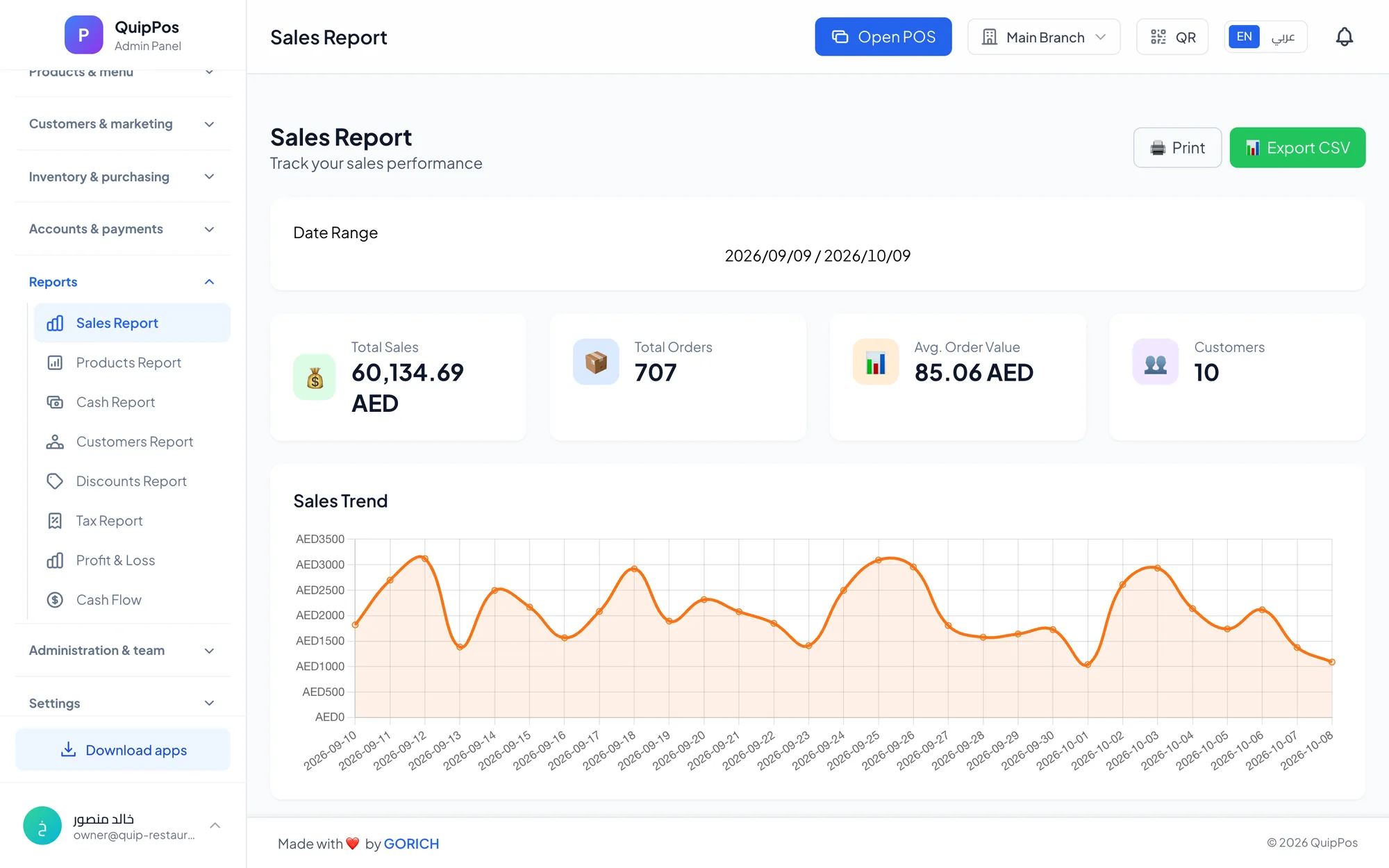
POS Reports: The Sales Numbers and KPIs Every Owner Should Check
The daily, weekly and monthly POS reports worth your time, how to calculate average ticket and margins, and what to do when a number moves.
 Management & finance
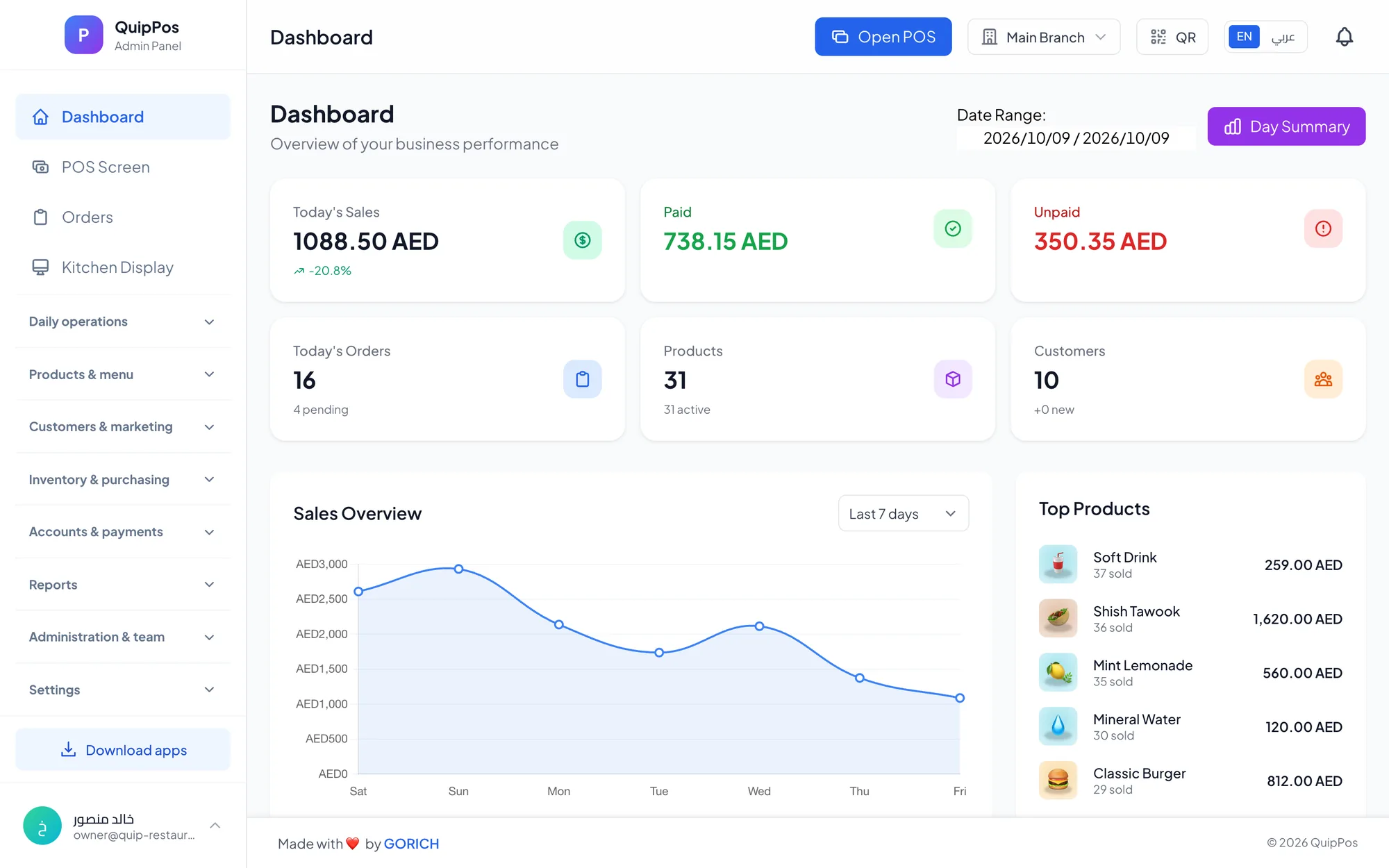
Multi-Branch Management: How to Run Every Location From One POS
What to centralise and what to leave to each branch, how to control stock, staff and cash across locations, and how to open a new branch without starting from scratch.
Management & finance
Employee Theft at the POS: How to Reduce Fraud and Cashier Mistakes
The common types of cashier theft and POS fraud, the controls that stop them, the warning signs in your reports and how to investigate fairly.